
Planning
Acatenango Day Hike vs Overnight: Which Is Worth It?
· 6 min read
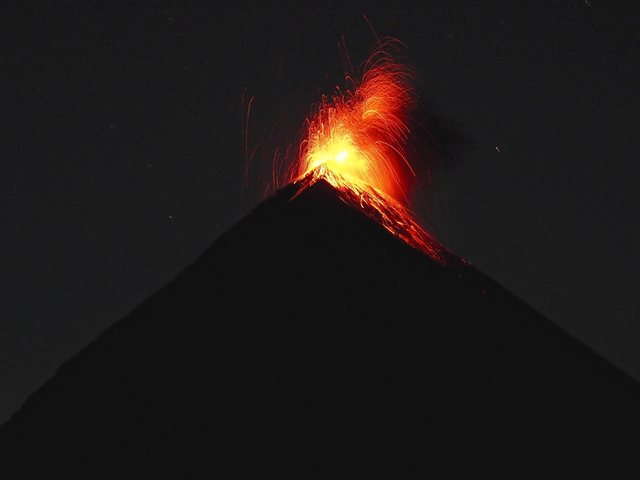
You can hike Acatenango in one day, but you will probably miss the reason most people go: Fuego’s eruptions are seen best after dark, from camp. A day hike packs about 1,600 m of climbing, and the same descent, into roughly 8 hours on foot. The overnight splits that effort in two and gives you the night.
Both are legitimate choices, and the day hike has real advantages that tour sellers rarely mention. Here is an honest side-by-side.
Day hike vs overnight at a glance
| One-day hike | Overnight (2 days, 1 night) | |
|---|---|---|
| Start | Leaves Antigua around 04:00–05:00 | Departure 08:00 (ours) |
| Walking | About 8 hours, roughly 1,600 m up and down in one go | Day 1: 5–6 h, +1,400 m. Day 2: optional 1.5–2 h summit push, then 3–4 h down |
| Back in Antigua | Late afternoon | About 13:00–14:00 on day 2 |
| Fuego | Mostly by daylight: ash plumes and rumbles | After dark from camp, about 3 km from the crater |
| Night at altitude | None | Camp near 3,600 m: 2–5 °C, below freezing December–February |
| Summit | Late morning; cloud can build by then | Optional, at sunrise |
| Typical price (2026) | Roughly $90–300 per person, by group size | Ours: $119 shared group; private $259 for one, less per head in a group. Market: about $55–330 |
What does a one-day Acatenango hike look like?
Day-hike departures leave Antigua before dawn, typically between 04:00 and 05:00, for the hour’s drive to the trailhead at La Soledad. You climb through farmland, cloud forest and scree in roughly four hours, reach the summit in late morning, rest briefly, and take about three hours to come down. Most groups are back in Antigua in the late afternoon. Operators list it at around 8 hours of walking and about 15 km.
It is the same trail and the same scree as the overnight, only in one push, with a lighter pack because you carry no sleeping layers. Fewer operators run it than the overnight, and prices in 2026 vary widely with group size, from around $90 to about $300 per person.
What do you miss on a day hike?
Mainly the dark. Fuego erupts around the clock, but in daylight an explosion is a grey puff of ash and a rumble; the glowing bursts and lava flows people photograph only show up after sunset. A day hiker on the summit at 11:00 sees the shape of Fuego, perhaps a plume, and the chain of volcanoes if the clouds allow. An overnight hiker watches it erupt through dinner, at midnight if they wake up, and again before dawn. Our piece on watching Fuego erupt from camp describes those hours.
You also miss sunrise from the top, which belongs to the 04:00 summit push on the second morning of the overnight.
Where does the day hike win?
- No night at altitude. You never sleep near 3,600 m, which lowers the risk of altitude sickness compared with the overnight.
- No freezing camp. You are back in a warm bed the same evening, and you carry a much lighter pack.
- One day instead of two, which matters on a tight itinerary.
If cold nights worry you more than a long day, or you only have one free day in Antigua, it is a fair choice. It is not easier, though. Doing the whole ascent and descent in one go is harder on legs and knees than splitting it over two days, and you start the climb having slept very little.
Where does the overnight win?
- The night show. Fuego after dark is the reason most people climb Acatenango at all.
- The effort is split: 5 to 6 hours up on day one, then the optional summit and the descent on day two.
- Sunrise from 3,976 m, if you take the summit push.
- A civilised start. Our pickup is at 08:00, not at 04:00.
The price of the overnight is a cold night: 2 to 5 °C at camp most of the year, and below freezing on many nights from December to February. On our hike the tent or dome cabin, sleeping bag and mat are provided; you bring the layers. Altitude is the other cost, and two nights in Antigua beforehand plus a slow pace keep it in check.
How fit do you need to be for each?
For the overnight, the benchmark we give is simple: if you can comfortably walk six hours with a daypack on hilly ground, you can do it, because the effort is split and the guide sets a pace the whole group can hold. The day hike asks for more. You climb about 1,600 m and come straight back down, on a short night’s sleep, at a pace that gets you off the mountain in daylight. Regular hikers who do long day walks at home handle it; people who rarely walk more than a couple of hours usually find the overnight a far better match.
Does the season change the answer?
A little. In the dry season, from November to April, day hikers have the best chance of a clear summit and a good daytime view of Fuego’s plumes. In the rainy season, cloud often builds by late morning, which hurts the day hike more than the overnight: an overnight hiker gets several chances, through the evening, the night and the early morning, for the sky to clear. Our guide to the best time to hike Acatenango goes month by month.
What about the night hike to the summit?
Some operators also sell a third format: leave Antigua late in the evening, climb through the night and reach the summit for sunrise, then come down without sleeping. You see Fuego in the dark on the way up and skip the camp, but you climb tired and cold, with almost no rest. It suits strong hikers with a tight schedule, and few others.
Which one should you choose?
If Fuego in the dark is why Acatenango is on your list, take the overnight. If you are fit, short on time and more interested in the climb than the eruptions, the day hike is reasonable. If you want a volcano but neither format appeals, look at Pacaya, a half-day hike.
Our overnight hike runs every day, with pickup at your Antigua hotel. See the two days hour by hour, what the price covers, or check dates and book.
Frequently asked questions
- Can you hike Acatenango in one day?
- Yes. Day hikes leave Antigua around 04:00 to 05:00, reach the summit in late morning and return in the late afternoon, with about 8 hours of walking. You will not see Fuego’s eruptions at night.
- Can you see Fuego erupt on an Acatenango day hike?
- You may see ash plumes and hear the explosions. The glowing eruptions people come for are visible after dark, which is why most hikers stay overnight.
- Is the Acatenango day hike easier than the overnight?
- No. It is shorter in total time but harder in one go: about 1,600 m up and down in a single day. It does spare you a night at altitude and the cold camp.
- Is the overnight worth the extra night?
- For most people, yes, because the night is when Fuego’s eruptions are visible. If you mainly want the climb and dislike the cold, the day hike is a reasonable alternative.
- Which option is better for altitude sickness?
- The day hike, because you do not sleep near 3,600 m. On the overnight, two nights in Antigua beforehand and a slow pace keep the risk down.