
The volcano
Watching Fuego erupt from camp: what the night is like
· 5 min read
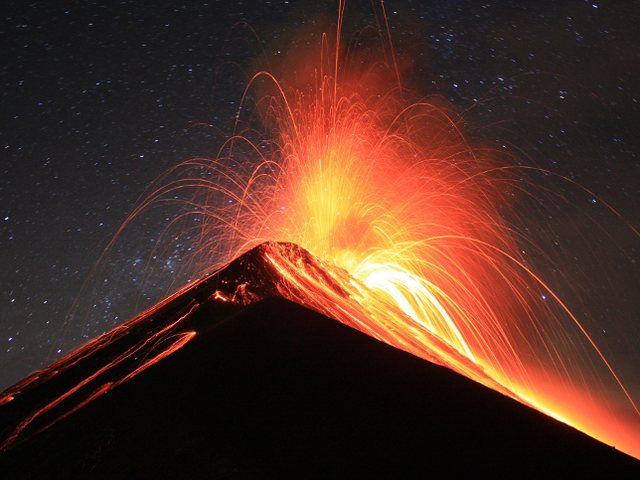
The reason people climb Acatenango at all is the night: from camp, Volcán de Fuego erupts across the valley, three kilometres away, and it does so constantly. There is no waiting for a scheduled show — you eat dinner to a background of orange pulses and go to sleep to the sound of the mountain.
What you will actually see
- Incandescent pulses every few minutes — glowing rock thrown above the crater rim, fading as it falls.
- Small lava streams on the flanks on active nights — slower, orange-red, unmistakable.
- A glowing cloud ceiling when the sky is overcast: the eruption lights the clouds above the cone from below.
- A rumble you feel more than hear, and occasionally fine ash drifting to camp on the wind.
Why you watch Fuego from camp, not from its slopes
For years, Antigua operators have sold an optional walk from camp toward Fuego’s crater. The municipality of Acatenango announced a ban on 1 April 2026, restated when the park reopened in August 2026, but the hike runs again with local operators: our partner offers it for Q200, paid in cash at camp. It is demanding, and the guide or the authorities can call it off at short notice depending on Fuego’s activity. The view from camp, about 3 km from the crater, is already the show. Our guide to whether Acatenango is safe explains the background.
Fuego’s record is serious: on 3 June 2018 its pyroclastic flows swept into villages on its flanks and killed more than 150 people. Distance is the protection. From camp you are about 3 km from the crater, and when Fuego turns violent the authorities close the whole area; if that happens on your date, you choose a free date change or a full refund.
Photographing it
A phone can capture the big pulses; a camera earns its weight with two tricks. First, leave the shutter open: 10–20 seconds turns individual pulses into arcs of light and brings out the stars. Second, keep the camera and batteries warm inside your jacket — cold drains batteries, and 03:00 on a volcano is the coldest place your battery has ever been. A small tripod or a bag of rice as a rest is the difference between a memory and a photograph.
When the alarm rings at 03:00 for the summit push and you are tempted to stay in the sleeping bag — the glow over the ridge will talk you out of it. It is why this hike exists, and it is worth every step of the day before. Clear nights are most likely from December to February: see the best time to hike Acatenango.
Frequently asked questions
- Is it safe to watch an erupting volcano from the camp?
- Yes — the camp stands about three kilometres from Fuego’s crater, the established safe distance guides use, and the route is monitored daily. Guides adjust camp and routes when activity changes, and follow CONRED alert levels without debate.
- Will I see lava, or just smoke?
- By day it can be just the ash plume; the show is after dark, when the incandescent rock is visible against the night. Overnight hikers therefore see far more than day-trippers — another reason the camp exists.