
Planning
Best Time to Hike Acatenango: Dry vs Rainy Season, by Month
· 6 min read
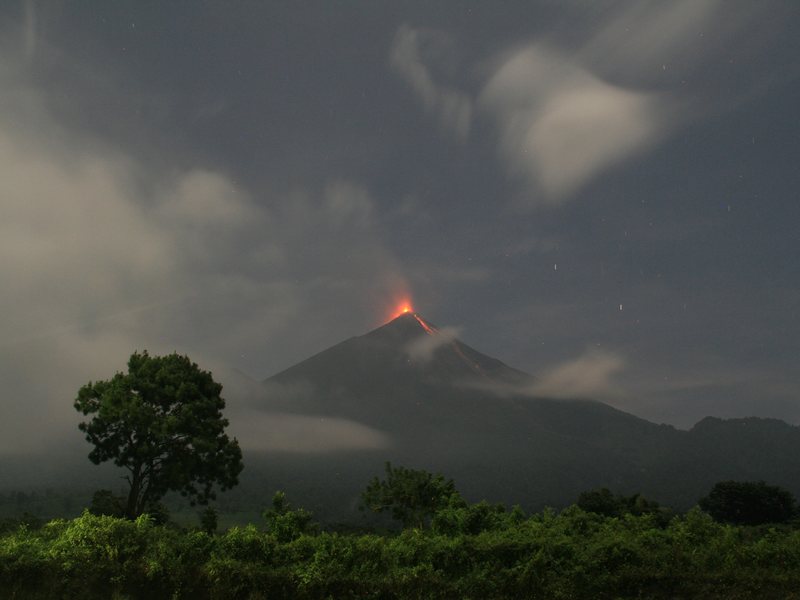
The best time to hike Acatenango is the dry season, from November to April, when the sky over Fuego is most often clear after dark. December to February bring the clearest nights and the coldest camp, often below freezing. The rainy season, May to October, is quieter and greener, but the view becomes a gamble.
The season changes what you see far more than what Fuego does. The volcano erupts on its own schedule all year. What the calendar decides is whether clouds sit between you and the crater, how muddy the lower trail is, and how cold a night at roughly 3,600 m will feel. Here is how the year actually plays out on the mountain.
When is the dry season, and when does it rain?
Guatemala has two seasons. INSIVUMEH, the national weather and volcano service, places the rainy season roughly from May to October, with two peaks: one around June and a second, usually heavier, in September and October. Between them, in July and August, comes the canícula, a drier spell of a few weeks when the rain eases off. From November to April it barely rains in the Antigua valley; January averages only a few millimetres.
On the volcano the pattern is the same, with one twist: mountains make their own weather. Even in the dry season, cloud can wrap the upper slopes in the afternoon and clear again at night. In the rainy season the classic day is a clear morning, cloud building by midday and rain in the afternoon, which is exactly when you are climbing on day one.
Acatenango month by month
| Months | Weather | Fuego after dark | Camp at night | Crowds |
|---|---|---|---|---|
| November | Rains ending, first long dry spells | Often good from mid-month | Around 2–5 °C, first cold fronts | Busy, rising toward December |
| December–January | Dry and clear, windy at times | The most reliable of the year | Often below freezing, wind chill on the ridge | Busiest, especially over the holidays |
| February | Dry and clear | Very good | Below freezing on cold nights | Busy |
| March–April | Dry, the warmest days in the valley | Good | Around 2–5 °C | Holy Week fills Antigua |
| May | Rains begin, afternoon showers | Hit and miss | Around 2–5 °C, damp | Quieter |
| June | First rain peak | Often clouded over | Damp and cold | Quiet |
| July–August | Canícula: drier spells between storms | Better odds than June | Around 2–5 °C | Moderate |
| September–October | The wettest stretch of the year | The least reliable | Wet and cold, mud on the lower trail | Quietest |
Camp temperatures hover around 2 to 5 °C for most of the year and fall below freezing on many nights from December to February. Those are the figures we brief hikers with. A passing cold front can push the camp lower still, and wind on the ridge makes it feel colder than any thermometer says.
Is December to February the best time to see Fuego?
For the view, yes. The air is dry, clouds tend to clear early in the evening and the glowing bursts stand out against a black sky. Our piece on watching Fuego erupt from camp describes what those nights look like. The price is the cold. Camp sits around 3,600 m and frost on the tent is normal in these months. The sleeping bag and mat are provided; the rest is your layering, covered in what to pack for Acatenango.
If you want dry-season views without the hardest frosts, aim for the second half of November or for March. Both usually give clear nights and slightly kinder temperatures at camp.
Can you hike Acatenango in the rainy season?
Yes, and plenty of people do. The hike runs all year and rain alone does not cancel it: this mountain can see sun and rain in the same afternoon. What changes is comfort and the odds. The farmland section turns to mud, wet scree is heavier underfoot, and you may reach camp inside a cloud. Many evenings still clear for a few hours after dark, and on overcast nights an eruption lights the clouds from below, which is a sight of its own.
- Pack a real waterproof shell and a rain cover or liner for your pack. Wet layers at 3,600 m are a problem, not an inconvenience.
- Keep one dry base layer and dry socks sealed in a bag for camp, and do not touch them on the climb.
- Expect the climb to take the full 5 to 6 hours. Mud slows everyone down.
- If you can choose, pick July or August. The canícula often gives the best odds of the rainy season.
Thunderstorms build over the volcanoes on rainy-season afternoons. If one is close, get off exposed ridges and follow your guide’s call, even if it costs you a sunset.
Does Fuego erupt more in certain months?
No. Fuego has been in near-continuous activity for more than two decades, often with several small explosions an hour, and its rhythm does not follow the seasons. What can happen in any month is a paroxysm: a short, much stronger phase with lava fountains and tall ash columns. During those phases the authorities may close Acatenango for a few days. In August 2026, for example, ascents were suspended from 4 August and the park reopened on 7 August. Check the INSIVUMEH volcano bulletins in the days before your hike, and read whether Acatenango is safe for how closures work.
When is Acatenango most crowded?
The busiest stretch runs from November through the end-of-year holidays, when Guatemalan hikers and foreign visitors both head up and the main camps fill. Holy Week (Semana Santa) is the other peak: Antigua stages its famous processions, hotel prices climb and transport books out. In 2027, Holy Week runs from 21 to 28 March. In the wettest months, September and October, you will share the trail with far fewer people.
How far ahead should you book?
For December, January and Holy Week, a week or two ahead is sensible, not least because Antigua’s hotels fill up. The rest of the year, a few days is usually enough. With us, a booking made more than 48 hours before departure is confirmed straight away; inside 48 hours we check the place with the operator first and refund you in full if it is not available. Cancel or change more than 48 hours before departure and you get everything back.
Whatever month you pick, plan two nights in Antigua before the climb to acclimatise. When you have a date, book the shared-group overnight hike or go private with your own guide. The itinerary, hour by hour, shows how the two days run.
Frequently asked questions
- What is the best month to hike Acatenango?
- For clear views of Fuego, December to February are the most reliable months, and also the coldest. Late November and March are a good compromise: usually dry and clear, with a slightly less freezing camp.
- Which months are dry and which are rainy at Acatenango?
- The dry season runs from November to April, when it barely rains in the Antigua valley. The rainy season runs from May to October, with a first peak around June, a drier spell called the canícula in July and August, and the heaviest rain in September and October.
- Can you hike Acatenango in the rainy season?
- Yes. The hike runs all year and rain alone does not cancel it. Expect mud on the lower trail, cloud on some evenings and a damp, cold camp. Bring a real waterproof shell and keep a dry layer for the night.
- How cold is Acatenango at night?
- The camp at about 3,600 m sits around 2 to 5 °C for most of the year and drops below freezing on many nights from December to February. Wind on the ridge makes it feel colder, so bring a warm jacket, hat and gloves.
- When is Acatenango busiest?
- From November through the end-of-year holidays, and during Holy Week, when Antigua fills up for its processions. September and October are the quietest months.
- Does the season affect Fuego’s eruptions?
- No. Fuego erupts all year on its own rhythm; the season only changes how often clouds hide it. Strong eruptive phases can happen in any month and may close the trail for a few days.