
Safety
Is Acatenango Safe? Volcano Risk, Cold and Closures in 2026
· 6 min read
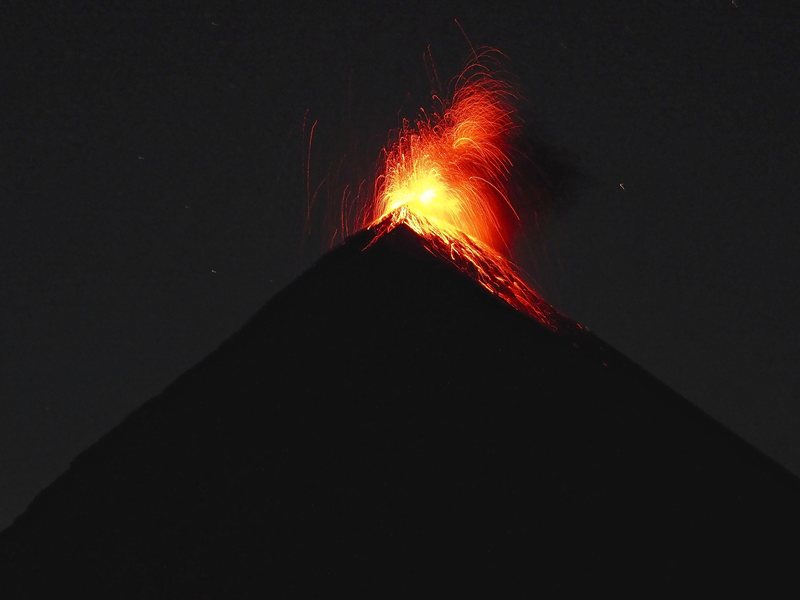
Acatenango is safe for most healthy hikers who go with a registered guide, respect closures and prepare for the cold. The volcano itself has not erupted since 1972. The real risks are its neighbour, Volcán de Fuego, which erupts constantly, the altitude of a camp near 3,600 m, and nights that drop below freezing.
Safe does not mean risk-free. People have died on these slopes, most recently in a cold snap in 2017 and in a restricted zone in 2024. Both cases are worth knowing before you go, because both had causes you can control.
Is Acatenango an active volcano?
Not in any way that affects hikers. Acatenango’s last eruption, a small steam-driven event, was in 1972, and before that from 1924 to 1927. Its highest summit, Pico Mayor, stands at 3,976 m. The activity you see from camp belongs to Fuego (about 3,763 m), the southern vent of the same volcanic massif, which has been erupting almost continuously for more than two decades. The usual camps face it from roughly 3 km away.
What happens when Fuego has a strong eruption?
Most of the time Fuego produces small explosions several times an hour: bursts of glowing rock, puffs of ash and the occasional lava flow down the ravines on its own flanks. Every so often, sometimes several times in a year, it enters a paroxysm, a phase of lava fountains, tall ash columns and sometimes pyroclastic flows. The deadliest in recent history, on 3 June 2018, sent pyroclastic flows into villages on Fuego’s southeastern side and killed more than 150 people.
Guatemala’s system for these phases is well practised. INSIVUMEH monitors the volcano and publishes bulletins; CONRED, the disaster-reduction agency, sets alert levels; INGUAT, the tourism institute, and the municipality close access when needed. In August 2026, for example, Fuego entered a paroxysm on 3 August, CONRED declared an orange alert, all ascents of Fuego and Acatenango were suspended from 4 August, INSIVUMEH declared the phase over on 5 August, and the Acatenango park reopened on 7 August. Ascents were also halted during eruptions in March and June 2025, and for a time in August 2025 after earthquakes raised the risk of landslides.
If the route is closed on your date, a booking with us is not lost: you choose between a free date change and a full refund. Rain alone does not cancel the hike.
Can you still hike to Fuego from Acatenango?
Yes, with a local operator. On 1 April 2026 the municipality of Acatenango announced a ban on climbing Fuego through its park, restated when the park reopened in August 2026, but operators run the Fuego hike from the Acatenango camp again. Ours costs Q200 in cash, and the guide or the authorities can call it off at short notice depending on Fuego’s activity.
The ban has a history. In December 2021 the municipality already prohibited approaching the high ground toward Fuego’s crater and camping on the saddle between the two volcanoes. In August 2024 a tourist died after being swept away by a rain-fed torrent in La Meseta, a restricted area between Acatenango and Fuego, and INGUAT asked prosecutors to investigate the operator involved. If anyone offers you the Fuego walk today, ask them which rule allows it.
How dangerous is the cold on Acatenango?
More dangerous than most people expect. In January 2017, six Guatemalan hikers died of hypothermia on Acatenango during a sudden cold snap; CONRED reported temperatures as low as −6 °C, with strong wind. Reports at the time pointed to the cold, the wind and a lack of preparation.
On a normal night, camp sits around 2 to 5 °C and falls below freezing on many nights from December to February. That is manageable with the right kit: our hike provides the tent or dome cabin, sleeping bag and mat, and you bring the layers. The list in what to pack for Acatenango is written for exactly this. Cotton, wet clothes and no hat are how a cold night turns into a dangerous one.
What about the altitude?
Camp is about 2,000 m higher than Antigua, and you get there in one day. Headache, nausea and poor sleep are common; serious altitude illness is uncommon at this height but possible. Two nights in Antigua beforehand, a steady pace and plenty of water make the biggest difference. Our guide to altitude sickness on Acatenango covers the symptoms and when to turn back.
What about the trail itself?
The path is not technical, but it is steep and loose. Most injuries are the ordinary kind: twisted ankles on the scree, falls on muddy sections in the rainy season, blisters. Boots with ankle support, trekking poles (our guides lend them) and a headlamp for the pre-dawn summit push deal with most of it. On rainy-season afternoons thunderstorms build over the volcanoes; if one is close, get off exposed ridges and follow your guide’s call. The best time to go explains the seasons.
Questions to ask any Acatenango operator
- Do you follow INSIVUMEH and CONRED notices, and what happens to my money if the route closes?
- How many hikers per guide? Ours: up to 12 per group, one guide for every six.
- Is a warm sleeping bag included, or rented on top?
- What does the guide carry for first aid, and how do they call for help?
- Do you sell anything on Fuego? In 2026, the right answer is no.
Who should not do this hike?
We do not recommend it if you are pregnant, or if you have heart, back or untreated blood-pressure conditions: the altitude multiplies the effort. Children under 12 usually find the climb very long. If you are unsure, ask your doctor before you book, and consider Pacaya, a much shorter volcano hike. Travel insurance is not included in tour prices; make sure yours covers hiking at altitude.
Emergency numbers in Guatemala: CONRED 119, National Civil Police 110, and INGUAT’s tourist assistance line 1500.
Once you have checked the conditions for your dates, you can book the overnight hike here.
Frequently asked questions
- Is Acatenango safe for beginners?
- Yes, for healthy beginners who walk regularly and go with a guide. The trail is steep but not technical. The bigger risks are the cold at camp and the altitude, so prepare for both.
- Has anyone died on Acatenango?
- Yes. Six Guatemalan hikers died of hypothermia during a cold snap in January 2017, and a tourist died in August 2024 after entering a restricted zone between Acatenango and Fuego. Preparing for the cold and respecting closures matter most.
- Is Acatenango open right now?
- After a short closure during Fuego’s eruptive phase in August 2026, the park reopened on 7 August 2026. Closures can happen at short notice, so check the INSIVUMEH bulletins and your operator in the days before you go.
- Can Fuego’s eruptions reach the Acatenango camp?
- Fuego’s lava and pyroclastic flows travel down the ravines on Fuego’s own flanks, and the camps face the crater from about 3 km away. Ash can drift over camp on the wind. During strong eruptive phases the authorities close the area rather than rely on distance.
- What happens to my booking if the volcano closes?
- If the authorities close the route for safety, you choose a free change of date or a full refund. Rain alone does not cancel the hike.