
Fitness
How hard is the Acatenango hike, honestly
· 6 min read
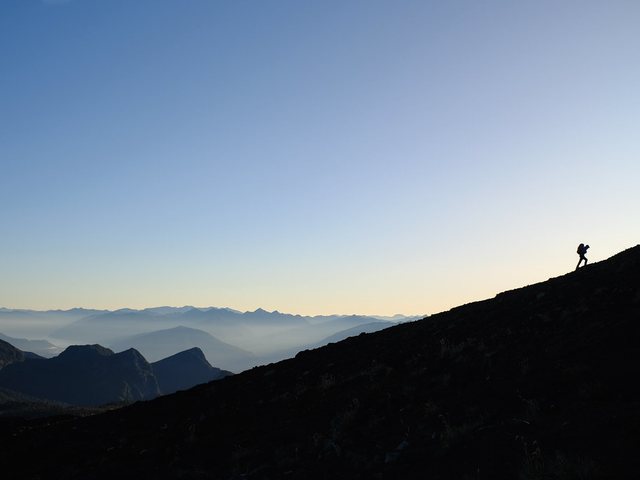
Acatenango is not a technical climb — there is no rock, no rope and no ice. It is a long, steep walk at altitude that ends in one of the best campsites on Earth. Almost anyone reasonably active can do it; almost nobody finds it easy. Here is the honest breakdown so you can judge for yourself.
The numbers
| Metric | Day 1 — ascent | Day 2 — summit & descent |
|---|---|---|
| Time moving | 5–6 hours | 1.5–2 h up, 3–4 h down |
| Elevation gain | +1,400 m (≈2,400 → 3,600 m) | +400 m to the 3,976 m summit |
| Terrain | Farmland, cloud forest, loose scree | Scree and forest trail |
If you can comfortably walk six hours with a daypack on hilly ground, you can do this hike. The pack can also be light: the camping gear, food and water for camp travel in the operator’s logistics, and a porter can carry your personal pack for Q300 per leg.
The climb, hour by hour
- Hour 1 — farmland: steep dirt switchbacks between milpa fields, the hottest part of the day.
- Hours 2–3 — cloud forest: better grip, shade, and the first views down to the valley.
- Hours 4–6 — volcanic scree: the honest crux. Every step slides back half a step, the air thins, and camp appears on the ridge above you.
- Camp — around 3,600 m: tents up, hot dinner, and Fuego starts its show across the valley.
The pace is set by the slowest hiker in the group, and guides build in rest stops every 30–40 minutes. This is not a race — the mountain decides the schedule.
The altitude is the real difficulty
Antigua sits at 1,530 m, camp around 3,600 m, the summit at 3,976 m — and the summit push starts at 03:00, when you are already sleeping at altitude. Fitness does not protect you from altitude sickness; acclimatisation and hydration do. Sleep two nights in Antigua before the hike, drink more water than feels necessary, eat dinner at camp even without appetite, and skip alcohol entirely the day before. If a headache, nausea or dizziness gets worse, tell your guide immediately: the answer is always to descend, and guides descend with hikers every season without drama. Our altitude sickness guide covers the symptoms and the danger signs in detail.
What actually makes people turn back
- The cold at camp — 2–5 °C at night, below freezing December through February. The provided sleeping bag does the heavy lifting; bad socks undo it.
- Not eating at camp — altitude kills appetite, and setting out for the summit on an empty stomach is how a hard morning becomes a miserable one.
- Borrowed boots — scree rewards ankle support and grip. Rent well ahead if you are not bringing your own.
The descent is easier than people fear — the scree that stole half your steps on the way up gives them back on the way down. Most groups are back in Antigua by early afternoon, tired and very pleased with themselves. The full timetable is in the Acatenango itinerary, hour by hour.
Frequently asked questions
- Can a beginner do the Acatenango hike?
- Yes, if a beginner walks regularly and is not carrying the group’s gear — the trail is steep but not technical, and the guide sets a pace everyone can hold. Complete beginners who never walk are the ones who suffer most.
- How fit do I need to be for the summit push?
- The 03:00 summit push adds about 400 m over 1.5–2 hours in the dark, on scree. If the day-1 climb left you empty, skip it and enjoy the sunrise from camp — it is optional, and guides are happy either way.